Category Archives: Uncategorized

Keepin’ it kosher

When I was in high school and received the highly anticipated results of the career test all seniors had to take, I wanted to go “Office Space” on that educational Magic 8 Ball.

In spite of my brother’s ability to render me useless with just the flash of his wrist and the word “veins,” I thought I was bound for medical school. My mother — after most heated household debates — predicted law school. And my father, ever the courtside superfan, wholeheartedly supported my secret ambition to play for the WNBA.

But after a battery of questions from my guidance counselor’s version of Zoltar, the computer printout told me I would make a fine rabbi. Cue “Hava Nagila” and Mo’s pissed-off face.

My frustration actually had less to do with the fact that this “infallible” PC found me fit for a profession that was typically reserved for old Jewish males and more to do with knowing I no longer had something that I could rely on to tell me what I should do with my life… what I was meant to bring to the table. My interests were many, and the choices that graduation and college afforded me felt like being pushed out of an airplane with no parachute or instructor tied to my back. I was free-falling, and I hated it.

Fast forward nearly a decade, and I’m flying the friendly skies again. In just over a month, I’ll be starting grad school to get my master’s degree in teaching English as a second language — a vastly different career path than the one I ended up choosing as an undergrad, and I don’t feel any more certain about this one than I did journalism.

That’s not to say I’m not excited about becoming a teacher. The same desire that compelled me to spend more than three years as a features writer has led me to this program: I want to help people tell their stories. But the difference now as I approach the land of syllabi for a second time is that I’m no longer looking at my life as something that should be relegated to doing one thing. Yes, I will be a teacher and I plan to throw all I am into it, but it’s not going to be the end of my story. And for the first time in my life, I know that’s OK.

I might fall in love with my job, or I might get furloughed or fired along the way. Who knows? The important thing is that I am following what feels true now, and I have to trust that this is ultimately what we’re all called to in life: authenticity and honest motivation.

The dearest redhead in my world once sent me this quote when I was in freak-out mode about my future and playing my favorite scratched record over the phone on countless occasions. You know the one: “What should I do with my life? No, really. Tell me.”

Like most to-do lists, I don’t often get to everything, but this particular agenda has been worth carrying around on a daily basis… just in case I forget what I was really meant to do with my life. Thanks, Mandy (and Walt, technically):


Thinking trashy thoughts

Some journalists gain access to Air Force One, industry parties and early movie screenings. But a few years ago, my press pass granted me admittance to the grand opening of the town dump. It’s cool, I’ll let your envy sink in for a minute…

Annnnnd, we’re back.

Juan Valdez himself could have come to my house and poured me a cup of coffee that morning, but I still wouldn’t have been motivated about my assignment to document how folks were feeling about the new site, which happened to be a whole 1/4 mile from the old one. Then I met Bettie, a 61-year-old vibrant force of a woman who had been working with the trash center for more than a decade. She might as well have been welcoming me to a housewarming.

Besides helping people haul their garbage to the proper receptacle five days a week, Bettie also addressed all the patrons as “Hon” and often bought doughnuts and coffee for the ones who stopped by early in the morning. During the holidays, she was known for setting up a Christmas tree on site, where she’d rescue other people’s discarded, but useful items from the dump and literally turn them into treasures for other locals.

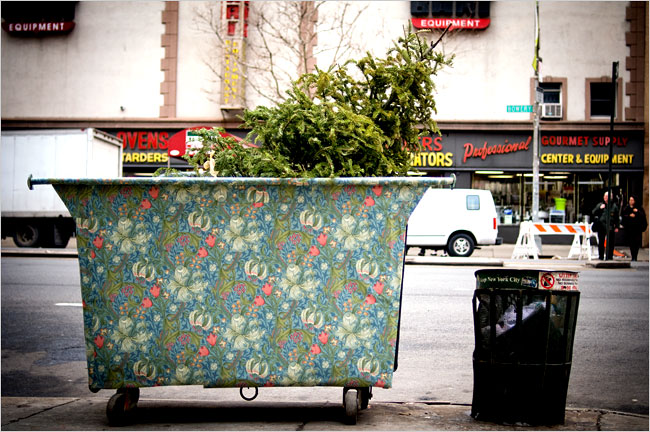
I was reminded of Bettie the other day when I came across this story. A trio of “polite graffiti artists” wallpapered a couple of Dumpters in New York City as part of a mission to beautify objects that were seemingly ugly. They wanted to make people smile or, at the very least, look up.

Rob Bennett for The New York Times

I think we’re all aware of the things in our lives we could eliminate to make our health, relationships, careers and days better, but sometimes the bigger challenge is accepting the things we cannot change — welcoming what we can learn from those fixtures and finding ways to at least wallpaper the immovable “Dumpsters.”

I had a friend who broke her leg last week days before her roller derby team’s season opener. She could be cursing the Goddess for this unfortunate turn of events, but instead she said she’s looking forward to finding out what lesson her body has for her during the rehabilitation process.

Another friend recently moved to a new city expecting to start a job that had been promised to her only to find out it was an empty offer. Though I’m sure she let some cuss words fly at hearing the news, she also quickly turned her energy toward polishing her resume. There’s a job out there she knows she’s meant to have, so she’s not going to waste any more time lamenting the one denied her.

Thanks to Bettie, the intervention artists of New York and these ladies, I’ve been inspired to think trashy thoughts this week. I’ve got a few Dumpsters in need of some wallpaper.

Objects in mirror are closer than they appear

At no other time has this car mirror concept made more sense to me than in this moment between the passing of one year and impending arrival of another. In spite of the excitement that the thought of a clean slate holds, it’s impossible not to also be mindful of the experiences that have collectively contributed to moving me toward this desire for a fresh start — the ones that both good and bad have, if nothing else, brought me one step closer to better understanding your experiences and lives.

“New” will be spoken, promised, hoped for and sought after a lot in the coming days, but this silly rabbit — for better or for worse — is going to strive for authenticity instead, thanks to the words and wisdom of Margery Williams and a couple of broken-in toys:

From The Velveteen Rabbit

“What is REAL?” asked the Rabbit one day, when they were lying side by side near the nursery fender, before Nana came to tidy the room. “Does it mean having things that buzz inside you and a stick-out handle?”

“Real isn’t how you are made,” said the Skin Horse. “It’s a thing that happens to you. When a child loves you for a long, long time, not just to play with, but REALLY loves you, then you become Real.”

“Does it hurt?” asked the Rabbit.

“Sometimes,” said the Skin Horse, for he was always truthful. “When you are Real, you don’t mind being hurt.”

“Does it happen all at once, like being wound up?” he asked, “or bit by bit?”

“It doesn’t happen all at once,” said the Skin Horse. “You become. It takes a long time. That’s why it doesn’t happen often to people who break easily, or have sharp edges, or who have to be carefully kept. Generally, by the time you are Real, most of your hair has been loved off, and your eyes drop out and you get loose in your joints and very shabby. But these things don’t matter at all, because once you are Real you can’t be ugly, except to people who don’t understand.”

Objects in mirror are closer than they appear, but so is the road before us. Here’s to letting 2010 continue the process of loving me until I’m real and shabby. I don’t want to forget 2009. I want to remember and be better for it. Happy New Year, folks!

Doing my little turn on the catwalk

I have been a model only one documented time in my life. For a brief moment during my internship with Southern Living — when I wasn’t ironing napkins, thinking of a clever way to describe meatless main dishes or driving a flower delivery van full of photo props — I held a bowl of salsa for a spread in the Christmas At Home magazine. You can only see my hands in the picture, and I’m pretty sure they’re blushing, so the fact that I’m about to make my debut on the international catwalk is just one more thing to add to the file I’m calling “Only in Bangladesh.”

I could lie and say that my agreement to sashay down a red carpet with music by Lady Gaga blaring in the background is due to some giant miscommunication where I thought I was actually saying “No” in Bangla. But the truth is, I’ve met some amazing people here who have reminded me of the oft-repeated but rarely activated “Life is short” approach to opportunities and challenges. And so I willingly said yes to this invitation to embrace, celebrate and perhaps even find my femininity in too-high heels with my friend Leah, some local university students and a small group of incredibly strong  women from the Acid Survivors Foundation.

The fashion show is a fundraiser for this organization, which is dedicated to supporting victims of acid violence and ending these horrific, heartless acts in Bangladesh. Acid attacks, which occur at least every two days in the country, are often the result of a young woman turning down the sexual advances of a male or rejecting a marriage proposal. Family and land disputes, dowry demands or a desire for revenge also have been cited as reasons for this violence, which causes catastrophic physical and psychological damage.

Backstage, pre-fashion show with acid survivor, fellow model and new lifelong friend, Nurjahan

As part of its work, ASF has set up a Fashion Design Training House to offer survivors the opportunity to develop livelihood skills through vocational training. In the fashion show tomorrow night, we’ll be wearing clothes that were made by women involved in the program. Some acid survivors will even be modeling the pieces.

ASF’s fashion design program is called “Projapoti,” which means “butterfly” in Bangla. In a press release, the organization tells this beautiful story about the philosophy behind choosing this name:

“During the process of silk making, the silkworm cuts itself off from all that could disturb her. In the cocoon, only her mental powers are present, which she uses to undergo a metamorphosis from caterpillar to butterfly.  Acid survivors draw back from society to recover and become physically and mentally strong before they reintegrate into society. With the help of this project, they can develop themselves, become economically independent, regain their self-confidence and like a butterfly spread their wings and fly out.”

To say that sharing a runway with these women will be an honor for me is an understatement. I’ve gained a life-changing perspective on what it truly means to be beautiful and persevere. Bring on the high heels, Bangladesh.

*** 12/14/09 UPDATE: Pictures from the show.

On top of the world

A wise, unidentified and refreshingly foulmouthed (wo)man once said, “Shit happens.” To which I’d like to add, “Even while hanging with monks. Even on top of the world.”

And now, let the wild rumpus of an explanation to this statement begin!

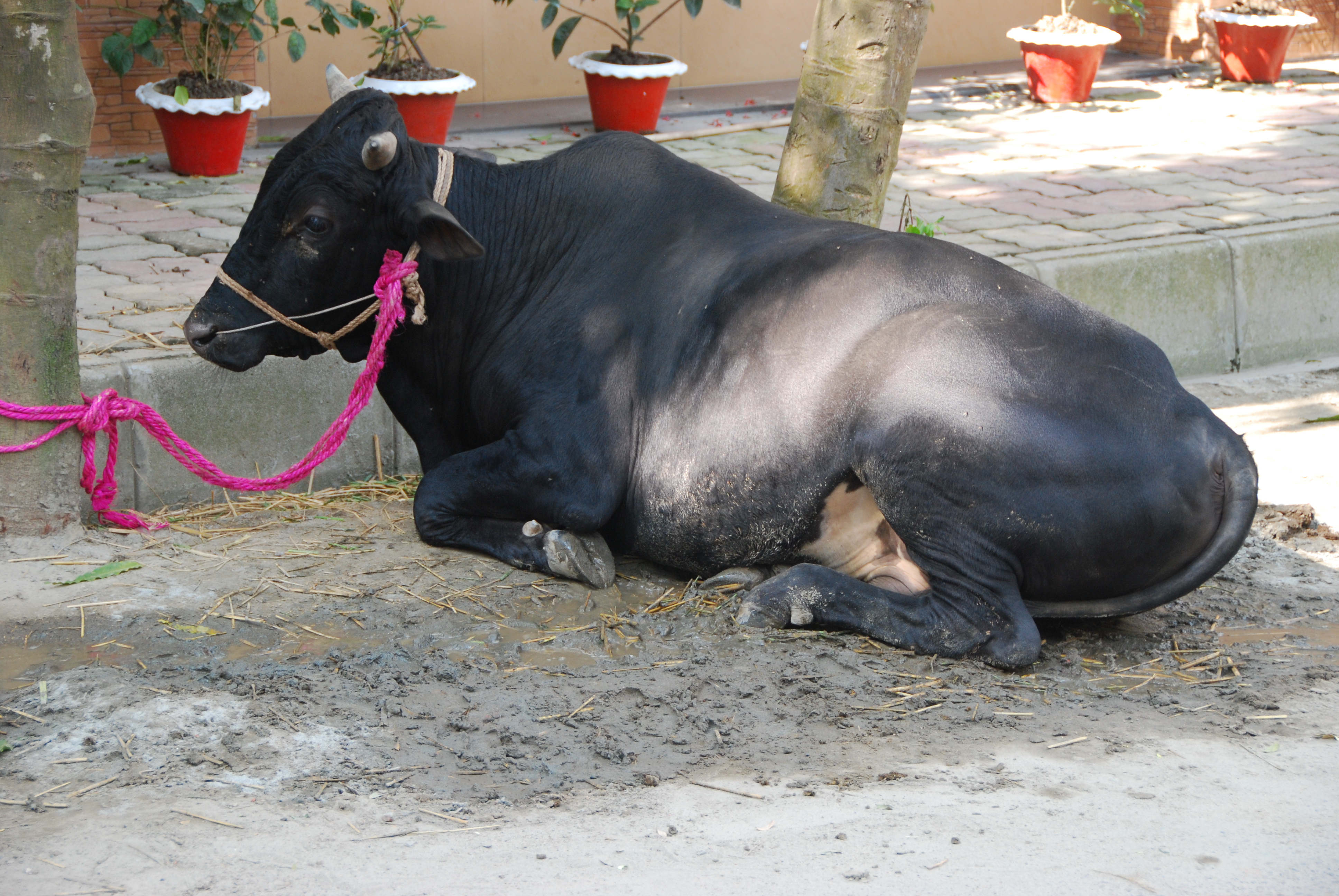
My amazing hosts and I journeyed to Nepal this past weekend to celebrate Thanksgiving and simultaneously avoid the ceremonial sacrifice of a few neighborhood cows, as it also happened to be Eid Ul-Azha in Bangladesh.

The dearly departed

Our hotel in Kathmandu was just down the street from Boudhanath Stupa, one of the holiest Buddhist sites in Nepal, where we were able to walk among a host of Tibetan monks offering prayers and tourists seeking peace. Even for those just looking to find a good momo at the home of the world’s highest peaks, it’s hard not to end up delightfully swallowed whole by this place and its quiet energy. (A momo, by the way, is a tasty Nepalese dumpling. Not me.)

Boudhanath Stupa in Kathmandu

Spiritual scene now sufficiently set, enter “shit” of the comedic incident variety.

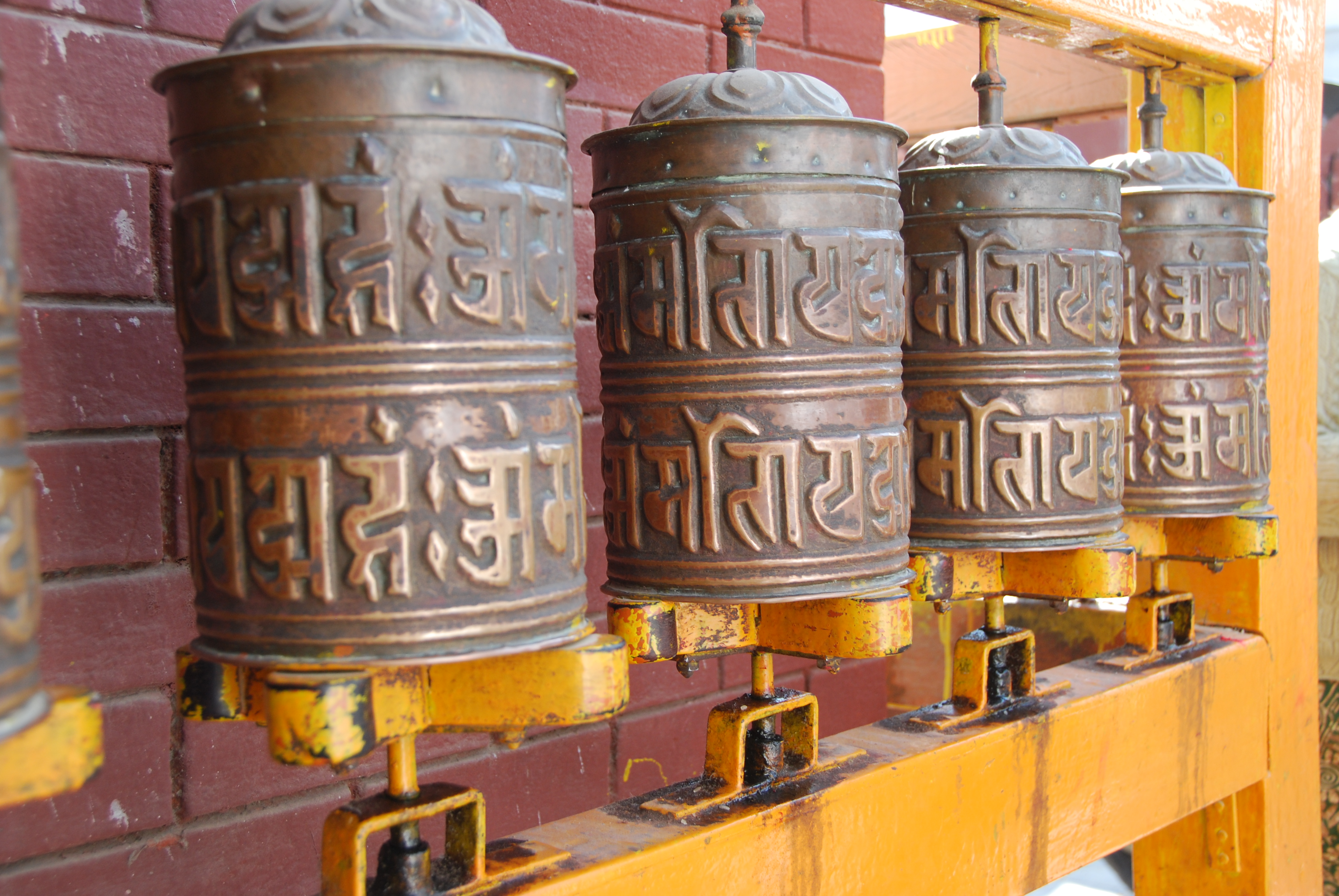
After enjoying a dinner of previously mentioned momos, we decided to take a nighttime stroll around the stupa. Most of the crowd from the day was gone, save a few locals lighting candles and children playing in the street. Though it is customary to walk around the stupa in a clockwise direction while also spinning prayer wheels embedded in the wall as a form of meditation, there’s a section where you can enter the interior of the sacred site for further contemplation. And so we did. At the exact moment I was feeling the silence of the space and thinking about my role in the grand scheme of things, my brother, vigorously spinning prayer wheels like a contestant on “The Price Is Right,” jammed his finger between two of them and yelled out “Shit!”

Epic.echoing.fail.

Prayer wheels

A day later, we put our lives in the small hands of a young Nepali taxi driver who promised to deliver us to Nagarkot, a village east of Kathmandu that is renowned for its sunrise view of the Himalayas, including Mount Everest. We left for the journey at 4:30 a.m. and sat in silence as he whipped us around dark, skinny, undeveloped mountain roads in a car that had some working seatbelts and few endearing features. After parking and breathlessly making our way up a trail of steps at an unforgiving altitude, we were welcomed at the final point of our destination with the utterance of one word from our driver, who until then had spoken nothing. The word, as you might have guessed, was “Shit!”

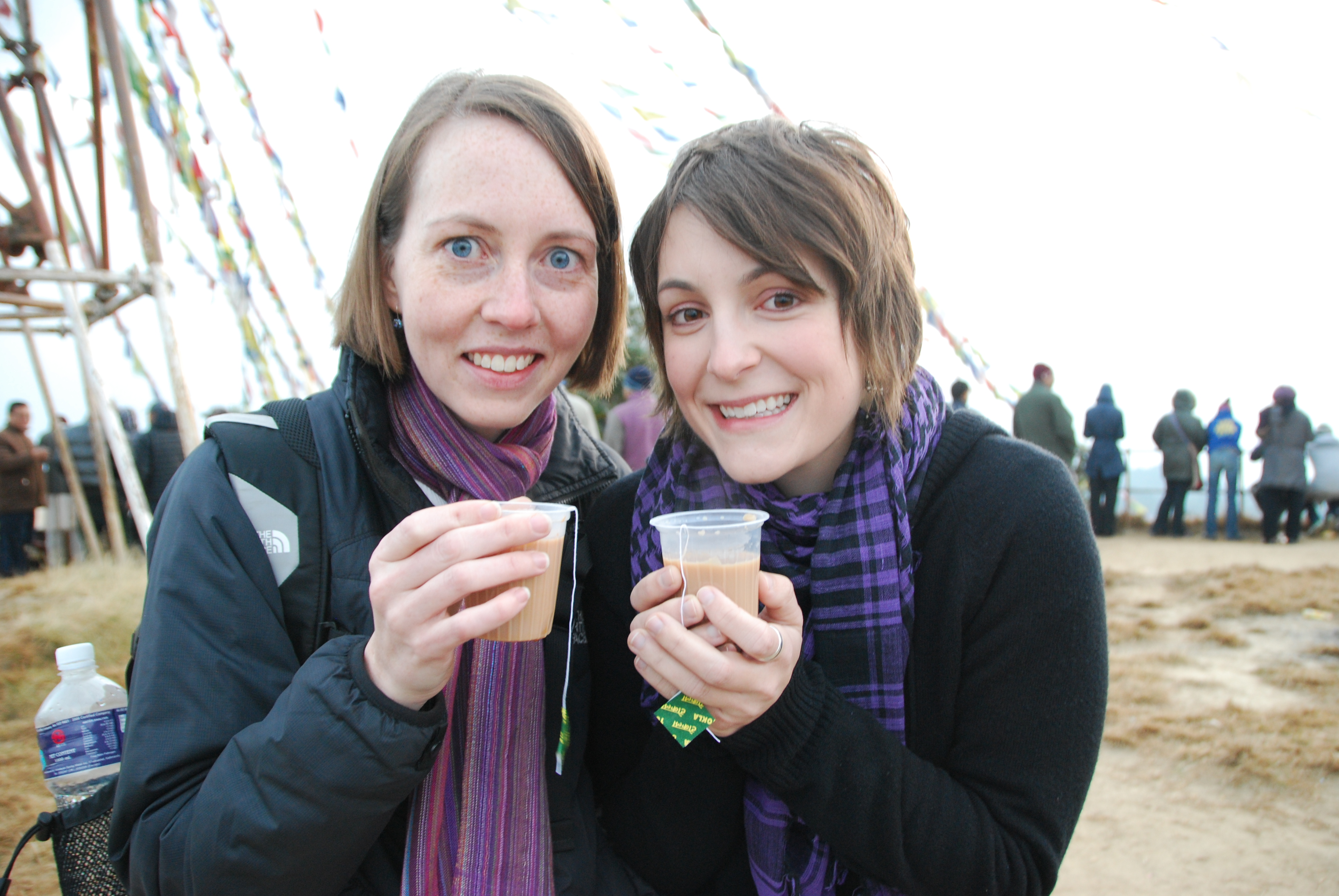
As it turns out, even the top of the world has its cloudy days. We couldn’t make out the range or the sunrise, but we sipped tea and shivered among other hopeful tourists from England, who sang Christmas carols and occasionally threw out the word “bloody” in swoon-worthy British accents.

A chilly morning in Nagarkot

I suspect that if you’ve made it this far into the blog post, you’re wondering what the point to this slightly immoral story might be. Keep in mind that I come from a family whose members jam their fingers in Buddhist prayer wheels, but for me these moments served as reminders that shit does happen, but so does grace and hilarity. You can’t fully experience or appreciate one without the others, so try to take life as it comes, trust the sun is rising even if you can’t see it and when the light eventually arrives (most often when you least expect it)… shit, enjoy the view:

A surprise view of the Himalayas on the plane ride home

Southern (Asia) Comfort

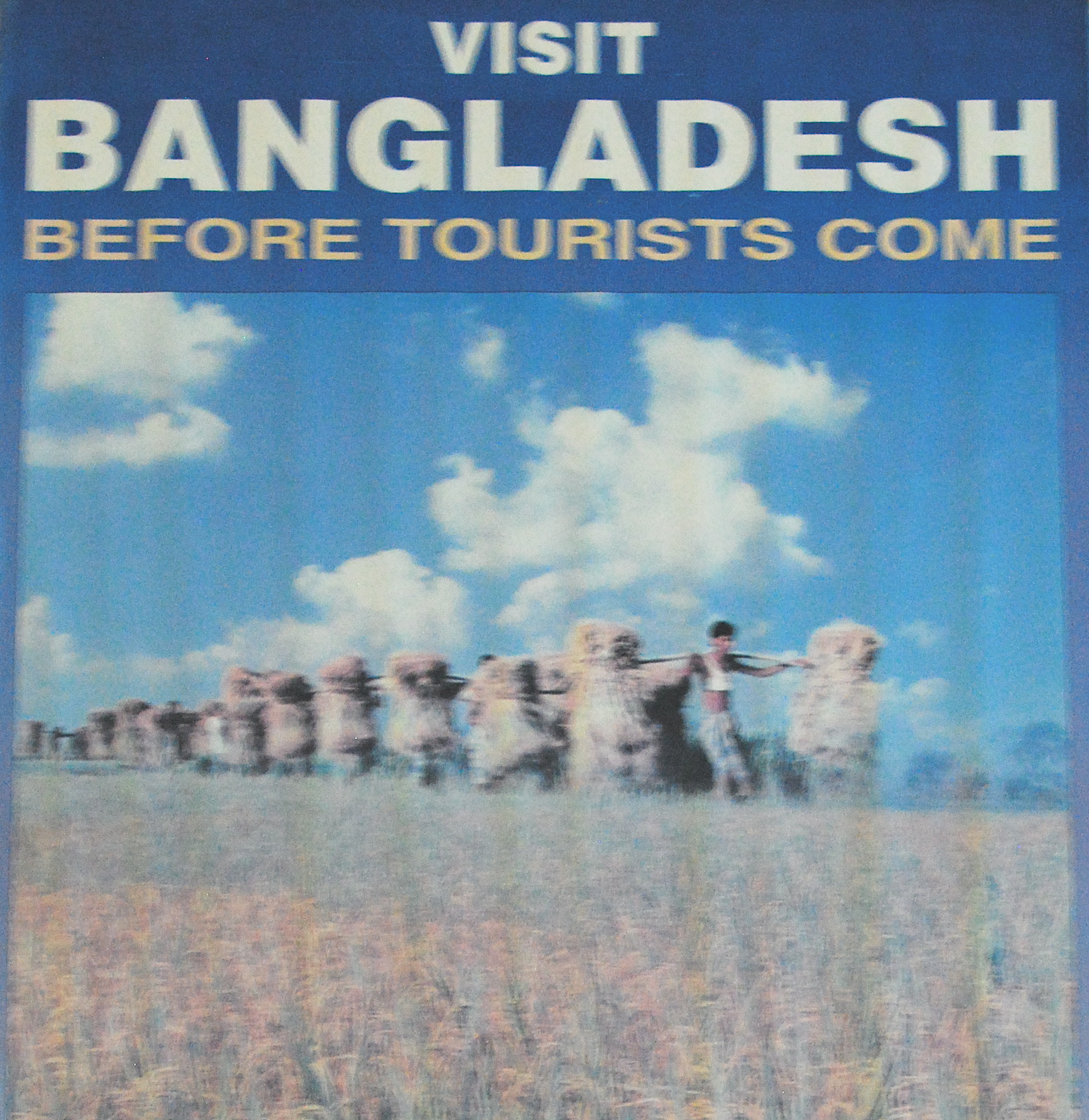
Whenever I meet people in Bangladesh who are not locals and tell them this is my first trip overseas, they generally raise their eyebrows and pat me on the shoulder while delivering some sarcastic line about how I chose “quite the location” to begin my traveling. As one of the world’s most impoverished and least developed countries, it’s not much of a draw for tourists looking to see and experience South Asia comfortably. It’s crowded and chaotic and once used the unsuccessful (or would it be successful?) slogan “Visit Bangladesh before tourists come.”

Yet, I am feeling quite lucky this is where my passport has taken me.

Though the movement of this place has made an impression with its rickshaws, pedestrians and cars that play a perpetual game of chicken on the streets, it is the mood of Bangladesh that will stay with me long after I leave. Ask anyone who has ever had the chance to stumble into this unique territory what they remember most about their time here, and I’m willing to bet my stomach-saving bottled water that it’s the people.

A few years ago, British economist Richard Layard did a happiness survey with the London School of Economics that turned into a book. The study found Bangladesh was the happiest nation in the world in spite of also being one of the poorest. Most of the richer countries, like the United States, Japan, Canada and Britain, ranked much lower on the list. While these results quickly conjure up the old adage, “Money can’t buy happiness,” I think there’s actually more to these findings. It’s not that the people of Bangladesh have learned to be happy by living with so little. It’s that they give so much of themselves to those they meet… whatever they can afford to part with, impart and more.

In an instant, they invite you into their home and offer you a cup of cha (tea), or haul a wooden chair to the middle of the village for you to sit in while they stand and answer any questions you might have of them in intense heat. They pour themselves into their work and families and conversations. They listen instead of just waiting to speak. They wish you well on your journey. They value community. In fact, the microfinance movement of enabling low-income people to lift themselves out of poverty through small loans began in Bangladesh — not the deep-pocketed divisions of our globe that actually had the means.

Tomorrow, my Thanksgiving may not include the traditional trimmings of marshmallow-laden sweet potatoes or cranberry sauce and dressing, but I’ll certainly bring a better understanding of what it means to give to the table thanks to this greatly underestimated country.

Use your words

thumbsup

In the past week, I have managed to flip off two Bangladeshi men who I was trying to tell “thank you” and “good job” to with a very American thumbs up. I don’t know why I’ve resorted to this mode of communication, as I wasn’t one to really whip out the opposable digit before, but to my detriment I’ve been very thumb happy here. Only recently did my brother kindly inform me that in Bangladesh, it’s the equivalent of giving someone the bird. While an unfortunate lesson to learn in this sweet country, it’ll be my little secret weapon when I get back to the states. Mine and all three readers of this blog (Hi, Mom! Let’s Skype this weekend).

As my Bangla is lacking (existence), I’ve had a lot of time to think about language here. And as someone who is planning to go to grad school to earn a master’s degree in teaching English as a second language, it’s something that should be on my mind. It’s been an invaluable experience to be reminded of the tremendous effect that being understood can have on a person — the connection that occurs and transformative power that is found and felt in a moment when one truly feels heard. And in turn, the awkwardness, frustration and loneliness that sets in when one is not.

On Sunday, I visited a remote village in Mymensingh, where I was asked to gather stories of how Habitat homes have changed the lives of those who have partnered with the organization there. Even though I had a translator present to help with the interviews, his English was somewhat limited and difficult to understand at times, leaving me to rely on short, simple words and a lot of smiling. The assignment was taxing, but worth the reminder of the actions, desires and challenges that unite us all, in spite of language and socioeconomic barriers.

I’ve found that phrases I’ve unconsciously collected through the years — “Use your words,” “Say what you mean, and mean what you say,” “Shoot the puppy” — have resurfaced in my daily mindset and approach to conversations here. Relax, PETA supporters and friends with furry loved ones. In journalism, “shoot the puppy” refers to painfully letting go of a part of your story that you love, but know is not essential to the piece; its presence would distract the reader or weaken the overall impact of the story, so you edit it out. It’s been fascinating to discover what I’ve managed to learn, communicate and understand without my puppy, Sarcasm, in Bangladesh. In the U.S., where I’m conveniently able to share an abundance of words with those around me, often very little is actually said in some ironically verbose conversations.

The other day, a coworker of mine at Habitat pointed out that the street kids in Dhaka, who tug on your shirt and heartstrings and mill about the cars and rickshaws begging for money, never really learn how to use or understand future tense. What they’re able to scrape together in a day, they have to use for food or other essentials in the same breath. They can’t save, because they run the risk of getting mugged. Planning or talking about tomorrow is a foreign concept; there is only now. A sad reality for sure, but one that those of us who live comfortably manage to forget actually applies to us as well.

For all, there is no day but today to say what you mean and mean what you say, so shoot the puppy and use your words.

Shop Class as Soulcraft

“There are fewer occasions for the kind of spiritedness that is called forth when we take things in hand for ourselves, whether to fix them or to make them.” -Matthew Crawford-

100_0200

I stole the title of this blog post from Matthew Crawford, a philosopher and mechanic who wrote the book “Shop Class as Soulcraft” to make people examine what we’ve lost by ceasing to work with our hands and how we can get it back.

As I was visiting St. Joseph’s School of Industrial Trades today in Dhaka, I thought a lot about Crawford’s words and the challenge and importance of finding work that not only connects you to your community, but also back to yourself.

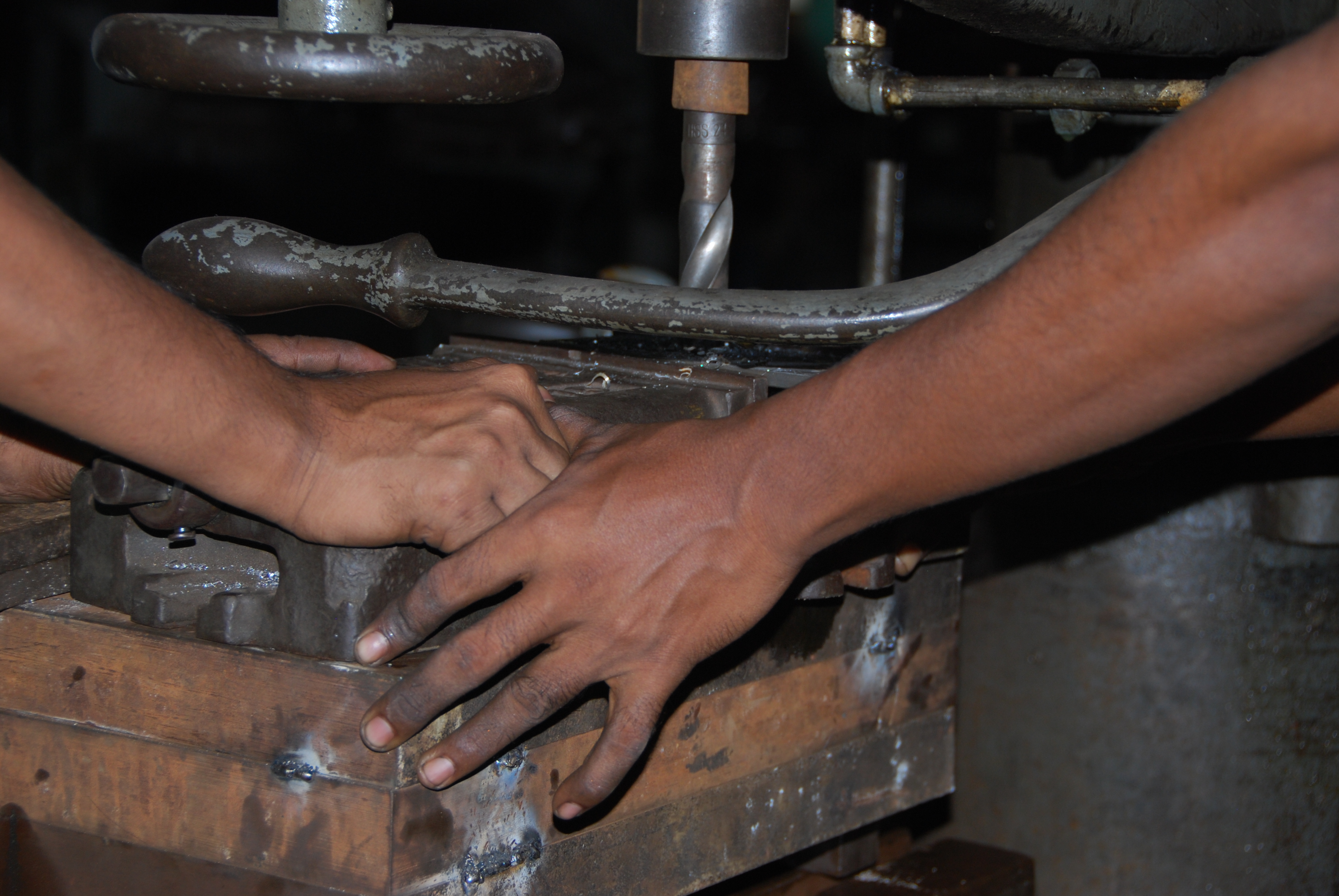
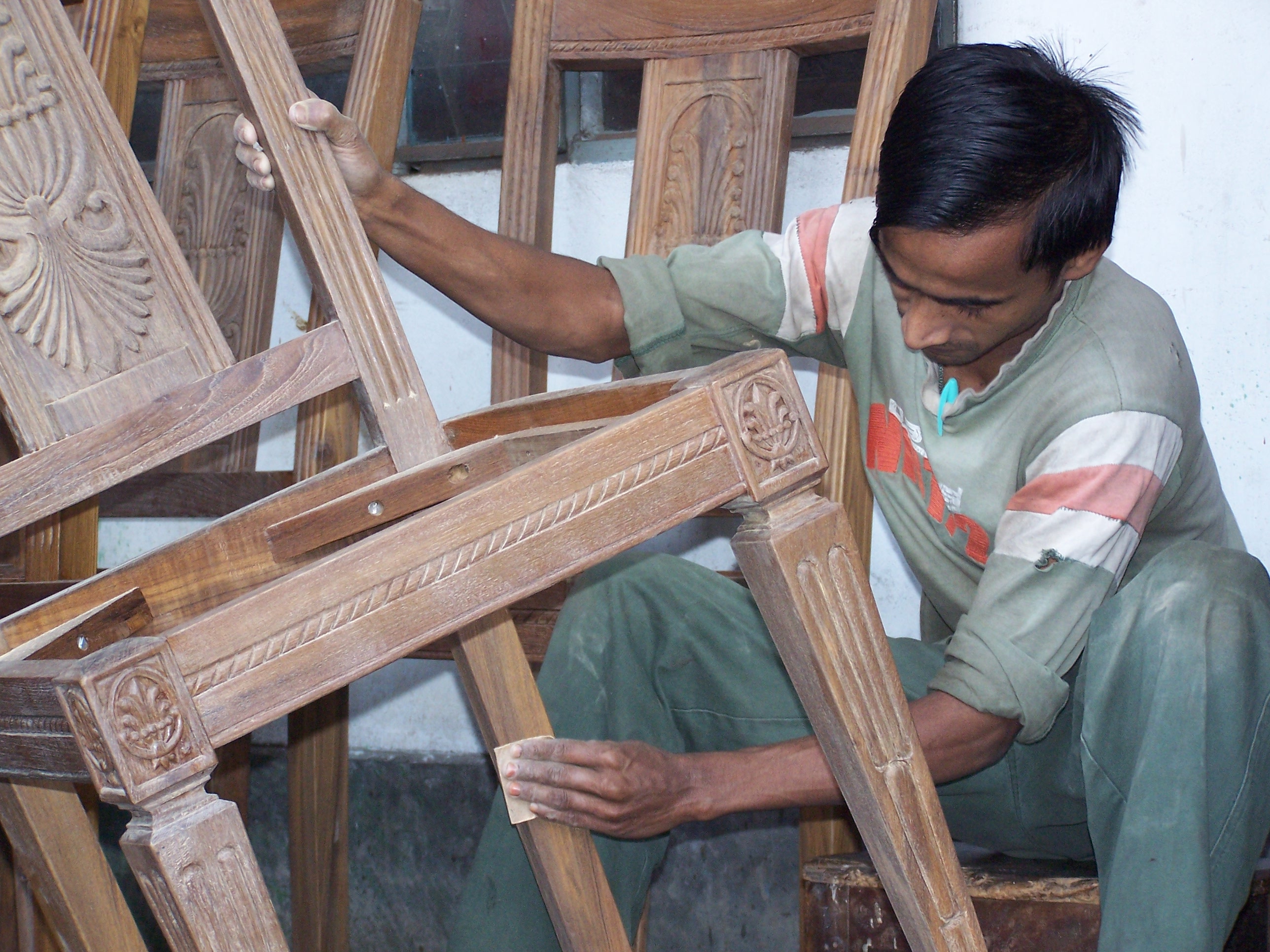
About 150 male students (between 15-20 years old) from all over Bangladesh apply to be part of this 3-year program, which teaches them all the necessary skills to build high-quality furniture from reclaimed wood by hand. The sale of their amazing work fully supports the school’s operations. Beyond that, it offers them job security in a place where education is scarce and poverty is rampant.

To see more photos, check out my album here.

Commissary loves company

wine glassAnyone who has ever sat near me before, during or after meals, or most notably, in achingly quiet situations (like a movie with multiple dramatic pauses or ceremony with long speeches and honored guests) knows I have a very temperamental stomach that’s really into letting me know it’s there. We have this game where it growls at the most inopportune moment, I pat it like I’m trying to appease a small, feisty animal, and it just growls again. Loudly. And longer. I love this game. It’s awesome.

As such, I was a bit concerned as to how said beast would take to the food of Bangladesh. One week in, I’m happy to report and knock on wood that all is quite well, spicy and delicious. I’d be remiss not to include the fact that the comforts of home — Cheerios, Blue Bell ice cream, red red wine — are available at a U.S. commissary not far from where I’m living. I took a trip there yesterday with my sister-in-law and quickly learned that the most crowded aisle is where they keep the beer and wine. As it’s illegal for anyone who’s not an expat to drink alcohol in the country, the commissary is the only place where you can buy it in Bangladesh. A group of guys who had just arrived to the country and looked like fraternity brothers but were actually with the Department of Defense were rejoicing at the sight of a case of Fat Tire. Had I seen any Raisinets, I suppose I would have felt the same.

Regardless of this easy access to a few guilty pleasures, I’m actually happiest when I’m getting to try the local fare. During a meeting my first day at work, plates were passed around with a snack I would later learn was a samosa, which is a pastry stuffed with very.spicy.vegetables. There’s a guy on the staff who has been watching to see if I will be able to “hang” with the locals. Of course, I have taken this on as my new favorite challenge, so I shoved the pastry in my mouth as he watched to see my reaction, maintained eye contact and gave him a defiant smile. Seconds later, my mouth immediately felt like it caught on fire and there was no water in sight for the next two hours. I never let on, though. Too legit to quit… hey, heeeey.

For lunch each day at Habitat, we eat a family style meal that has been prepared for us by a very dear Bangladeshi named Moses, whose smile has been my favorite to encounter here. The spread, which amazingly only costs me Tk 45 (less than $1), typically includes a curry made with vegetables, chicken or fish cooked in a hot spicy sauce, dahl (cooked yellow lentils) and plain rice. Utensils are not included. Though it doesn’t seem like there should be an art to eating with your hands, the first day I dove in, the guy next to me asked if it was my first time. I don’t know if he could tell by the rice on my lip or my lap, but I laughed and then promptly received the lesson to make your handful of food as compact as possible and push it into your mouth using just your thumb. It’s also important to note that it’s customary to only use your right hand when it comes to food here. The left hand is considered unclean, given its use in the bathroom. Enough said.

So I’m learning, happily and slowly, and digesting the lessons at the end of each day with a glass of red wine in my right hand and a happy stomach receiving pats from my left. Pictures soon, I promise.

Habitat for Humanity Bangladesh

Tomorrow, I will be starting my internship with Habitat for Humanity Bangladesh. Please watch this video and learn more about the important work that is taking place here :